Featured
The smart Trick of No-Cost Informational Debt Counseling ...
The smart Trick of Prevalent Misconceptions Surrounding B...
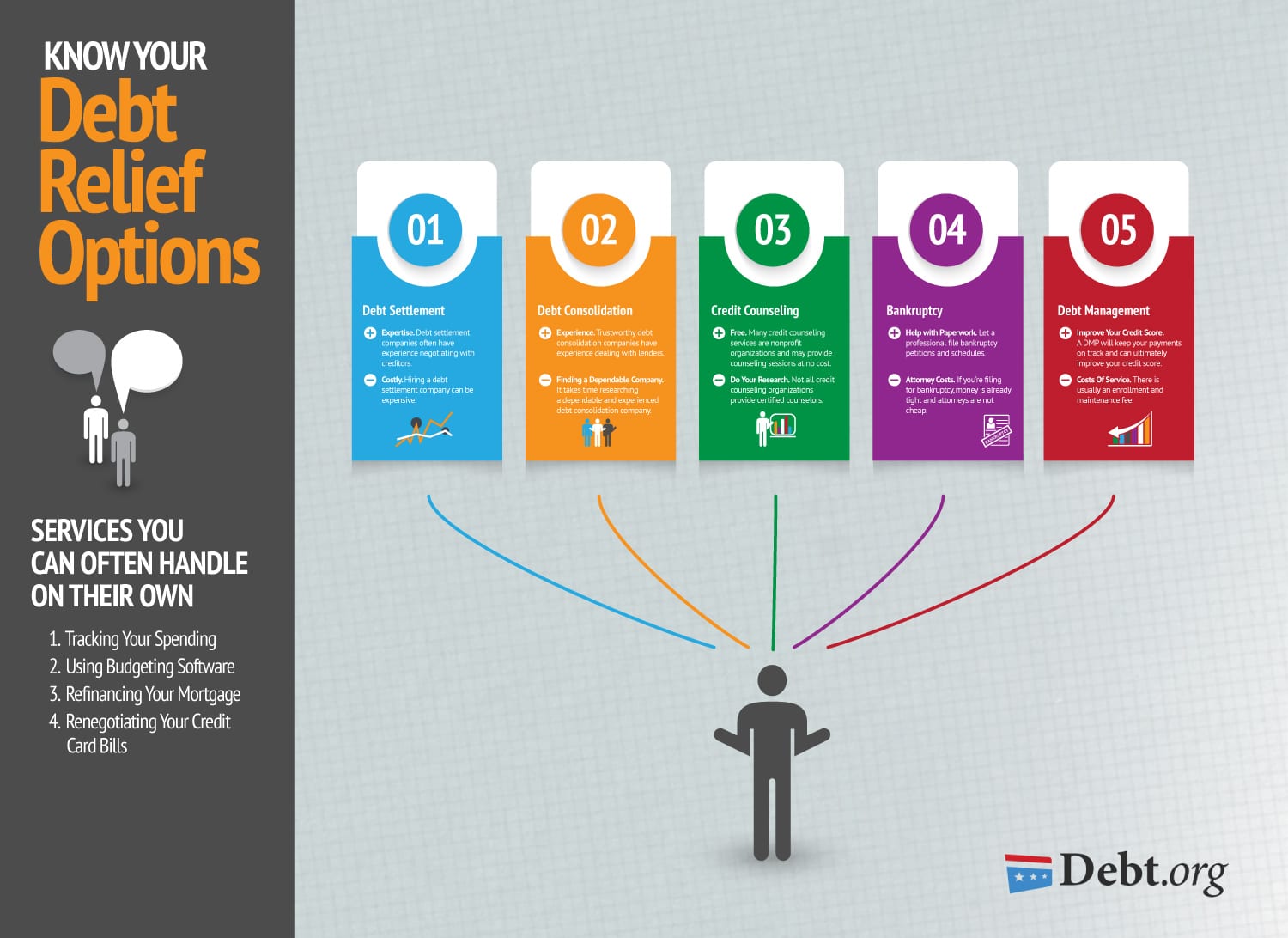
Table of Contents
That maximizes cash in the brief term, and you may have 3 to four years to save towards the negotiation amount. Extremely harmful to credit rating, mostly due to missed settlements and an unfavorable "cleared up" mark that could remain on your credit history record for up to 7 yearsMay be only choice if other options (financial obligation consolidation, equilibrium transfer charge card, debt mercy) aren't possibleTypically calls for a fee to the 3rd party, which could counter some or all of the financial savings from debt settlementMay aid you prevent personal bankruptcy if you've missed out on several paymentsNot all financial institutions work with debt settlement companies Debt forgiveness might be ideal for you if you are experiencing a monetary difficulty that makes it virtually impossible to pay down your debt balances.
With a DMP, you make one monthly repayment to the debt therapy company. Those funds are then dispersed to financial institutions of your unprotected debts, such as charge card and installment financings. The firm deals with your financial institutions to decrease rate of interest rates or waive fees, however some creditors may refuse such giving ins.
A debt consolidation lending combines your qualified debts right into one new finance. It can help you pay for financial obligation if you have the ability to protect a funding price that's reduced than the typical rate of the accounts you're combining. You need to avoid from racking up financial obligation on those recently removed accounts or your financial debt can expand also higher.

That gives you plenty of time to remove or considerably decrease your balance while making interest-free settlements.
Not known Facts About Unsecured Debt Dealing with Property Tax Escrow Shortages: When to Call a Housing Counselor Solutions
You might need it if your financial institution or a collection agency ever attempts to collect on the financial debt in the future. When a loan provider forgives $600 or more, they are required to send you Type 1099-C.
Financial debt mercy or negotiation generally hurts your credit score. Anytime you work out a financial obligation for much less than you owe, it may look like "settled" on your credit history record and impact your credit history for seven years from the day of negotiation. Your credit history can likewise drop substantially in the months leading to the forgiveness if you fall back on repayments.
The Single Strategy To Use For Is Debt Forgiveness Suitable for Your Family
This circumstance commonly results from underreporting income, not filing returns on time, or inconsistencies located throughout an IRS audit. The consequences of collecting tax financial debt are serious and can include tax liens, which offer the IRS a lawful case to your building as safety for the financial obligation.
Greater passion rates on readily available credit scores. Salaries and Financial institution Accounts internal revenue service can impose (confiscate) incomes and checking account to please the debt. Lowered earnings and interruption of crucial financial procedures. Property Seizure In extreme cases, the internal revenue service can seize and offer building to cover the financial obligation. Loss of beneficial properties and possible displacement.
Anxiety, anxiousness, and other mental wellness problems. Social Preconception Dealing with lawsuit from the internal revenue service can carry social stigma. Damage to credibility and connections. Employment Opportunities An inadequate credit rating due to exhaust financial debt can restrict employment possibility. Trouble searching for or maintaining a work. Federal government Benefits Tax financial debt might influence qualification for government benefits, such as Social Safety and Medicaid.
Getting The Understanding Various Relief Programs You Need to Know About To Work
The OIC considers numerous variables, consisting of the taxpayer's income, expenses, property equity, and capability to pay. Efficiently bargaining an OIC can be intricate, requiring a detailed understanding of the IRS's standards and a solid disagreement for why your deal straightens with your ability to pay. It is very important to note that not all applications are approved, and the procedure calls for detailed economic disclosure.
The internal revenue service assesses your total financial scenario, including your earnings, costs, property equity, and capacity to pay. You must likewise be present with all filing and settlement needs and not be in an open bankruptcy case. The IRS likewise considers your compliance background, assessing whether you have a document of prompt filing and paying taxes in previous years.
More About Pricing Honesty That APFSC Eliminate
The application procedure for an Offer in Compromise involves a number of thorough steps. First, you should complete and submit IRS Form 656, the Offer in Compromise application, and Type 433-A (OIC), a collection details statement for people. These kinds require comprehensive monetary information, including details about your income, financial obligations, expenditures, and possessions.
Back tax obligations, which are unsettled tax obligations from previous years, can dramatically increase your overall IRS financial debt if not addressed quickly. This financial debt can build up passion and late payment penalties, making the initial quantity owed a lot larger over time. Failing to repay tax obligations can lead to the IRS taking enforcement actions, such as providing a tax obligation lien or levy against your building.
It is essential to deal with back tax obligations as quickly as possible, either by paying the sum total owed or by arranging a layaway plan with the IRS. By taking aggressive actions, you can prevent the accumulation of additional interest and penalties, and stop extra hostile collection actions by the internal revenue service.
One common reason is the belief that the taxpayer can pay the full amount either as a round figure or with a payment strategy. The internal revenue service additionally thinks about the taxpayer's income, costs, possession equity, and future earning potential. If these elements show that the taxpayer can pay for to pay greater than the offered quantity, the internal revenue service is most likely to reject the offer.
Getting The Consumer Protections While Undergoing Debt Relief To Work
It is critical to offer exact and total information in your application and to speak with a tax obligation professional to enhance the chances of acceptance. Managing IRS debt can be complicated and challenging. Tax obligation professionals, such as CPAs, tax attorneys, or registered agents, can provide invaluable assistance. They have the know-how to browse the details of tax regulation and IRS treatments.

Table of Contents
Latest Posts
Getting The Is It Worth Compared to Going It Alone Approaches To Work
The smart Trick of No-Cost Informational Debt Counseling Resources Available to You That Nobody is Discussing

The smart Trick of Prevalent Misconceptions Surrounding Bankruptcy That Nobody is Talking About
More
Latest Posts
Getting The Is It Worth Compared to Going It Alone Approaches To Work
The smart Trick of No-Cost Informational Debt Counseling Resources Available to You That Nobody is Discussing
The smart Trick of Prevalent Misconceptions Surrounding Bankruptcy That Nobody is Talking About